NEST DOSSIERSteal An Egg Values

Database · UPDATED SEPTEMBER 2, 2026

Steal An Egg Pet Rarities: Families, Tiers, and Evidence States

Use the rarity label shown in the current client and keep special families separate from an assumed linear tier list.

Short answer

Use the rarity label shown in the current client and keep special families separate from an assumed linear tier list.

Official Steal An Egg Values platform screenshot
Official Steal An Egg Values image. Numbers visible in promotional artwork may differ from the current game.
01

The working route

Use the rarity label shown in the current client and keep special families separate from an assumed linear tier list. Use this pet rarities answer for the next decision in play, not as a promise that every account or server will produce the same outcome. The useful part of pet rarities is the order of the actions and the visible state around the result.

For pet rarities in Steal An Egg, the strongest current description is specific: The community wiki identifies Huge, Mutated, Secret, Eternal, and Divine as named families but explicitly warns that names alone do not prove displayed stats or order. Other late-August wikis publish conflicting ladders. That pet rarities evidence is enough to plan a route, but it does not erase the difference between a published example and the build running on your screen today.

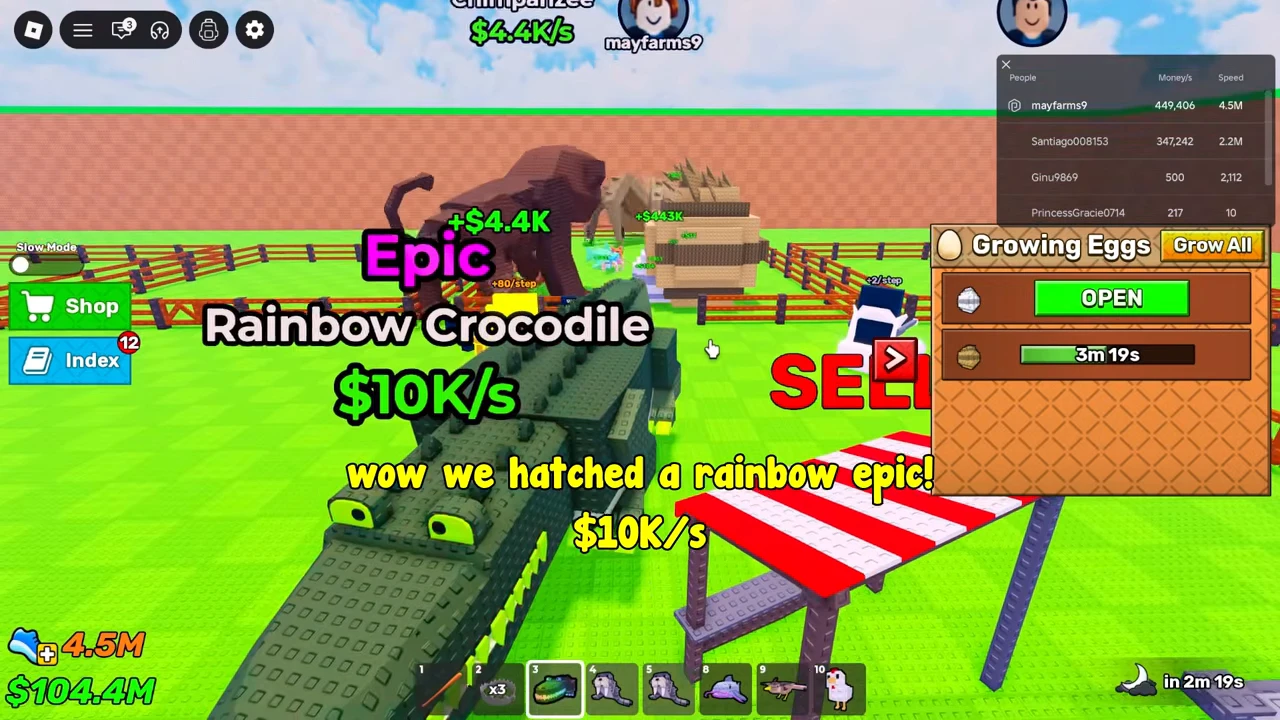
Steal An Egg pet pen showing several hatched pets and income labels
Third-party gameplay capture of a populated pet pen. Displayed income is a dated example, not a universal pet value.
02

Record the starting state

Before testing pet rarities, write down current Speed, equipped trail, biome, egg weight, mutation, pet boosts, base upgrades, and server identity. Retain the pet rarities note beside the game while you play. If one field in that pet rarities note changes halfway through, finish the session for fun if you want, but do not use the mixed result as the basis for an egg value, pet income comparison, speed threshold, mutation claim, or biome route.

Begin pet rarities by trying to note the displayed rarity or family. Complete that pet rarities capture before an egg sale, hatch, trail swap, mutation roll, biome move, or base upgrade removes the opening state. The pet rarities screenshot helps when it includes the surrounding labels; a cropped number without its item, unit, or menu can create more confusion than an approximate written note.

03

Put the steps together

Run pet rarities as one route with no side objective. First, note the displayed rarity or family. Next, attach the current source. Finally, compare income only when size, mutation, and boosts match. Save the pet rarities attempt to one goal; a narrow run is easier to repeat and answers the player question faster than a long session with several unrelated upgrades.

For pet rarities, maintain the biome gate, carried egg, weight, mutation, guardian route, pet income label, trail, and sale prompt visible throughout the route. If the pet rarities route crosses several menus or areas, note the order in plain language. That pet rarities order matters because two players can report different outcomes while both are accurate for their own unlocks, boosts, event state, or progression.

04

Keep the units attached

For pet rarities, write down the full label before the number. A Steal An Egg pet rarities field may use Speed, weight, sale cash, income per second, multiplier, probability, hatch time, and index progress. A bare pet rarities value means little until the screen identifies its unit, so preserve the displayed abbreviation instead of silently expanding it.

Read the pet rarities result and setup screens together. If the pet rarities outcome looks unusually strong, check for an equipped effect, event bonus, paid option, difficulty modifier, or personal unlock. A weak pet rarities result can instead point to the wrong biome, insufficient Speed, a guardian loss, a hidden boost, full pet space, or mismatched egg weight.

Steal An Egg guardian chasing the player with a RUN warning
Third-party gameplay capture of the guardian chase state.
05

Find the real bottleneck

A fair pet rarities comparison changes one decision. Save the pet rarities route, duration, item identity, and visible boosts stable, then review the outcome before and after attach the current source. The pet rarities result need not have laboratory precision, but it should explain what changed without crediting three upgrades at once.

Choose the next pet rarities move from the queue or failure you can see. If pet rarities stops before the tested point, improve access or preparation; if it stops during the point, improve execution, speed, coverage, or survival. A pet rarities stop after the point points instead to capacity, collection, selling, or the follow-up route.

06

Where this advice can fail

The main limitation for pet rarities is straightforward: Do not turn community navigation labels into a verified strength ranking. Treat the pet rarities boundary as part of the answer, not a footnote. It keeps one attractive pet rarities screenshot, community table, or high-end account from becoming a universal rule for every Steal An Egg player.

For pet rarities in Steal An Egg, avoid copying the largest number, rarest label, or fastest published clear without its conditions. A late-game pet rarities in Steal An Egg example may hide prerequisites; an event guide may describe content that has ended; a promotional image may show a dramatic marketing result rather than a normal baseline.

07

A low-risk beginner plan

A new player can use pet rarities without chasing a perfect outcome. Set one modest pet rarities objective, keep enough resources to recover from a bad roll, and complete the sequence to write down the displayed rarity or family; then attach the current source; then compare income only when size, mutation, and boosts match. The pet rarities aim is a repeatable loop, not an endgame account before its supporting systems are available.

If the first pet rarities attempt fails, identify the stopping point. Return to pet rarities preparation when access is missing, simplify the pet rarities route when navigation causes the loss, and delay an expensive upgrade while the current setup has unused capacity. One diagnosed pet rarities failure teaches more than several rushed attempts with no note.

08

Use the guide later in the game

An established account should retest pet rarities in Steal An Egg rather than assume the beginner order still applies. Higher pet rarities in Steal An Egg unlocks can move the bottleneck, turn a former luxury into a useful upgrade, or make an old recommendation irrelevant. Repeat the three pet rarities actions against the developed setup you actually use, not an imagined fresh start.

For a mature Steal An Egg pet rarities check, opportunity cost matters more than sticker price. For pet rarities, ask what the same currency, slot, route time, or upgrade choice could accomplish elsewhere. Maintain a pet rarities reserve for a structural unlock when it creates productive space, safer access, or broader options than a small numerical improvement.

09

Check the pictured state

Use nearby pet rarities in Steal An Egg screenshots for orientation. Match the pet rarities game identity, interface, location, or action before relying on a number in the artwork. The pet rarities in Steal An Egg picture works best as a landmark that locates the relevant screen and shows which surrounding labels belong with the result.

A pet rarities screenshot cannot show every prerequisite or prove a displayed value is permanent. Read the pet rarities caption, then judge the pictured state with the biome gate, carried egg, weight, mutation, guardian route, pet income label, trail, and sale prompt in your own session. Leave any pet rarities watermark or source mark intact so a third-party capture remains distinguishable from an official interface image.

10

Finish with these checks

Before relying on this pet rarities result, confirm the current Steal An Egg identity, relevant unlock or location, and unit. Make sure the pet rarities route still lets you mark the displayed rarity or family, then attach the current source, and finally compare income only when size, mutation, and boosts match. Stop the pet rarities route where the interface or requirement no longer matches.

The final pet rarities in Steal An Egg decision is simple: use the route when the starting state is known and the result repeats. Treat a pet rarities in Steal An Egg figure as provisional when only a dated third-party example supports it. Leave the pet rarities field unanswered when item, version, event state, unit, or game identity cannot be matched without guessing.

11

Two-pass pet rarities check

Use the first pet rarities pass to learn the route rather than prove a conclusion. Follow the pet rarities sequence to note the displayed rarity or family; then attach the current source; then measure income only when size, mutation, and boosts match, keep the biome gate, carried egg, weight, mutation, guardian route, pet income label, trail, and sale prompt visible, and write down where the run slows or breaks. Reset pet rarities to the same first state before the second pass; otherwise the comparison measures progression drift instead of the decision this page is meant to answer.

Use the second pet rarities pass to change only one part of the sequence. If the pet rarities result improves, save the before-and-after conditions with the unit and date. If the pet rarities result does not improve, preserve the failed pet rarities result too: it can rule out one explanation and point toward the wrong biome, insufficient Speed, a guardian loss, a hidden boost, full pet space, or mismatched egg weight without turning an uncertain observation into a confident rule.

Sources

AllThings.How pet roster and income

AllThings.How current pet index