Search the observed states
These ten rows come from mayrushart’s August 20, 2026 upload. The exact client build is not identified. Each row represents a visible pet state, rather than a species-wide starting income or a complete current roster.
Search the displayed name and use rarity or readable-weight filters to narrow the records. Open the row’s evidence before using a number. The observation ID keeps different specimens or later changes from being silently combined.
Read the name, rarity and display together
The table preserves the income abbreviation on the pet’s overhead label. Weight is shown only where the selected specimen has a readable Kg label. Egg → this hatch means a linked recorded hatching sequence whose on-screen egg label is simply Egg; it does not supply a formal egg species or a guaranteed hatch result.
10 of 10 recorded states
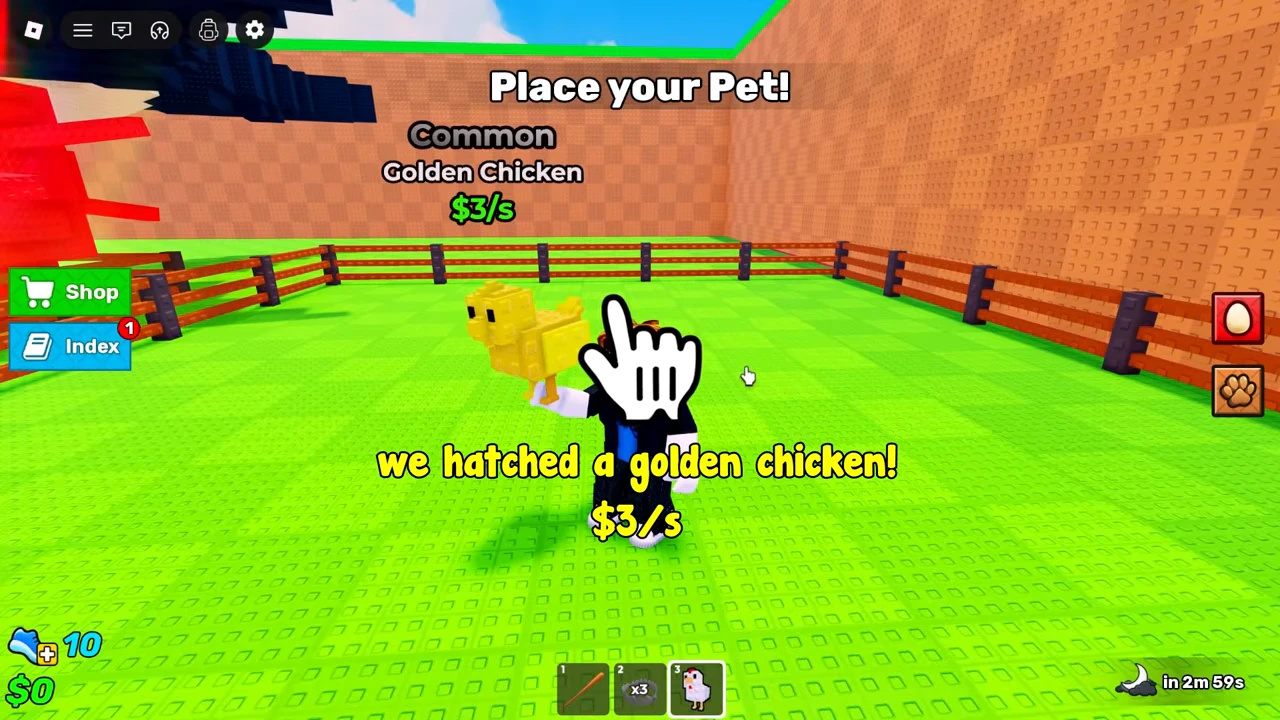
Golden Chicken
$3/soverhead display
- Weight
- Not observed
- Source egg
- Egg → this hatch
View this state and its evidence
- Active-list income
- Not recorded
- Size class
- Not observed
- Mutation field
- Not observed
- Source biome
- Not linked
Observation 26s · mayrushart · uploaded 2026-08-20. Exact client build unknown.
The visible label is Egg. This linked hatch does not identify a named egg species or guarantee its outcome. Watch the recorded sequence.
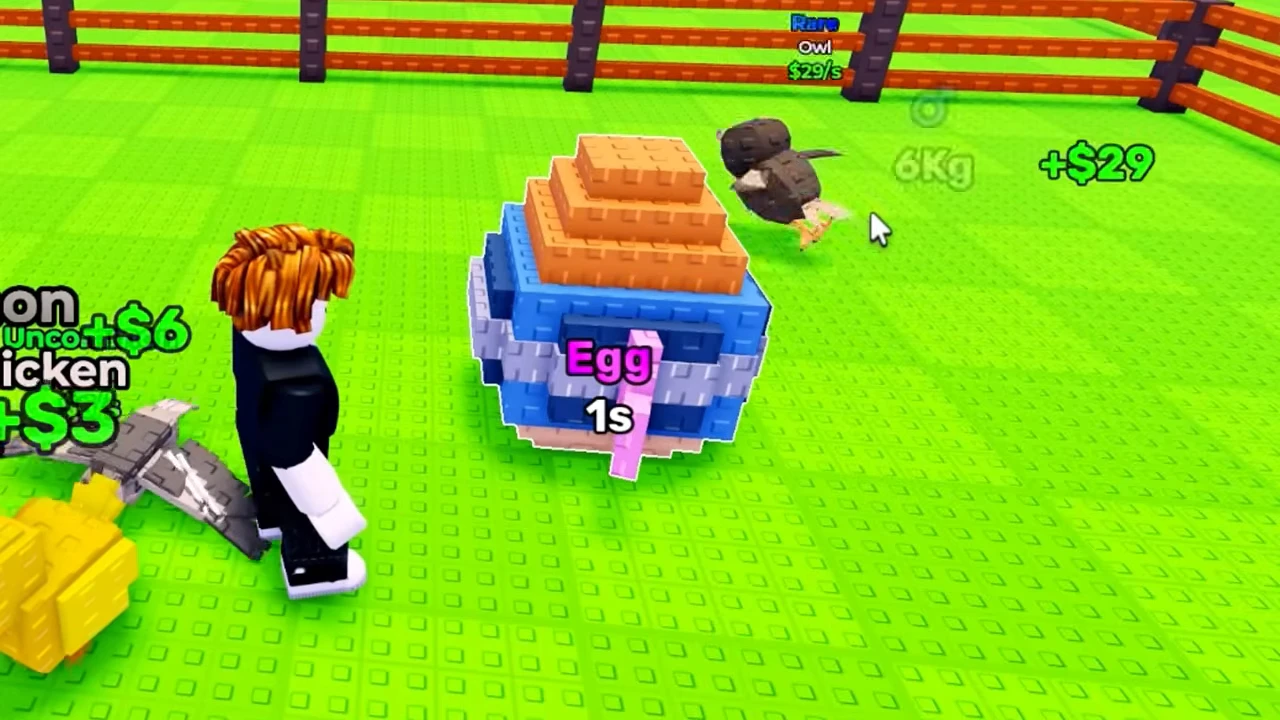
Owl
$29/soverhead display
- Weight
- 6Kg
- Source egg
- Not linked
View this state and its evidence
- Active-list income
- Not recorded
- Size class
- Not observed
- Mutation field
- Not observed
- Source biome
- Not linked
Observation 100s · mayrushart · uploaded 2026-08-20. Exact client build unknown.
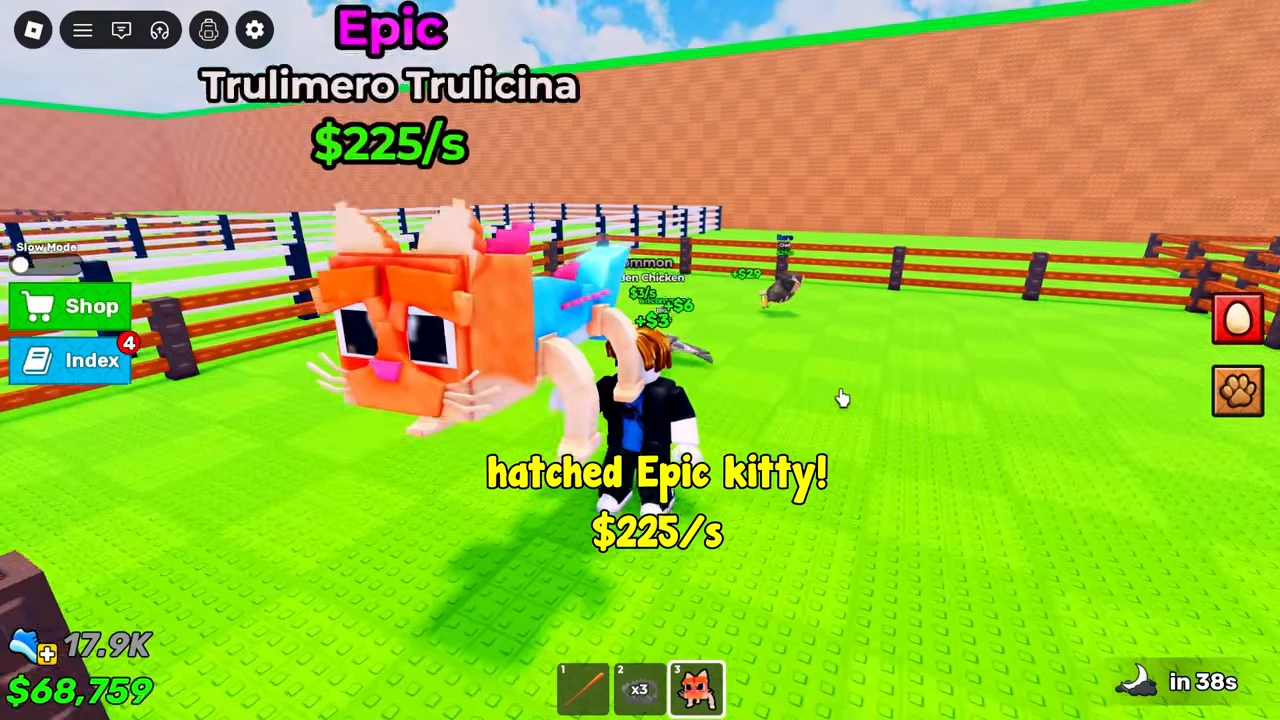
Trulimero Trulicina
$225/soverhead display
- Weight
- Not observed
- Source egg
- Egg → this hatch
View this state and its evidence
- Active-list income
- Not recorded
- Size class
- Not observed
- Mutation field
- Not observed
- Source biome
- Not linked
Observation 107s · mayrushart · uploaded 2026-08-20. Exact client build unknown.
The visible label is Egg. This linked hatch does not identify a named egg species or guarantee its outcome. Watch the recorded sequence.
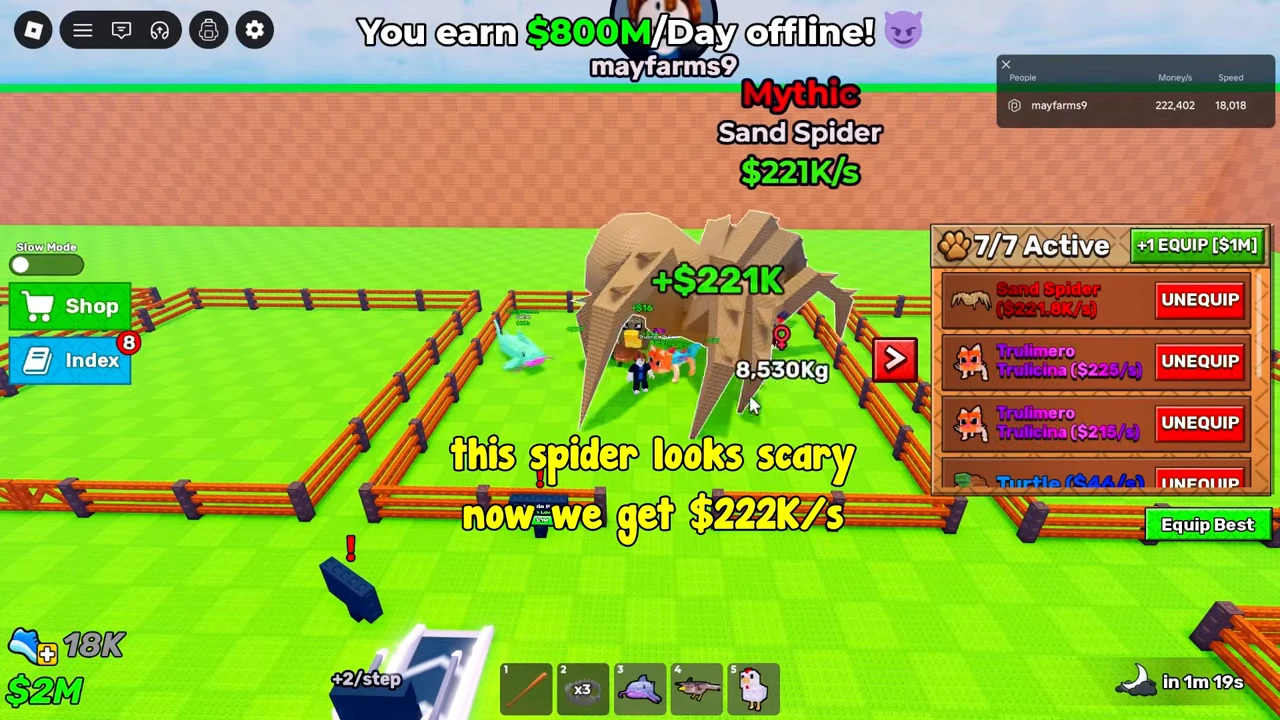
Sand Spider
$221K/soverhead display
- Weight
- 8,530Kg
- Source egg
- Egg → this hatch
View this state and its evidence
- Active-list income
- $221.8K/s
- Size class
- Not observed
- Mutation field
- Not observed
- Source biome
- Not linked
Observation 178.8s · mayrushart · uploaded 2026-08-20. Exact client build unknown.
The visible label is Egg. This linked hatch does not identify a named egg species or guarantee its outcome. Watch the recorded sequence.
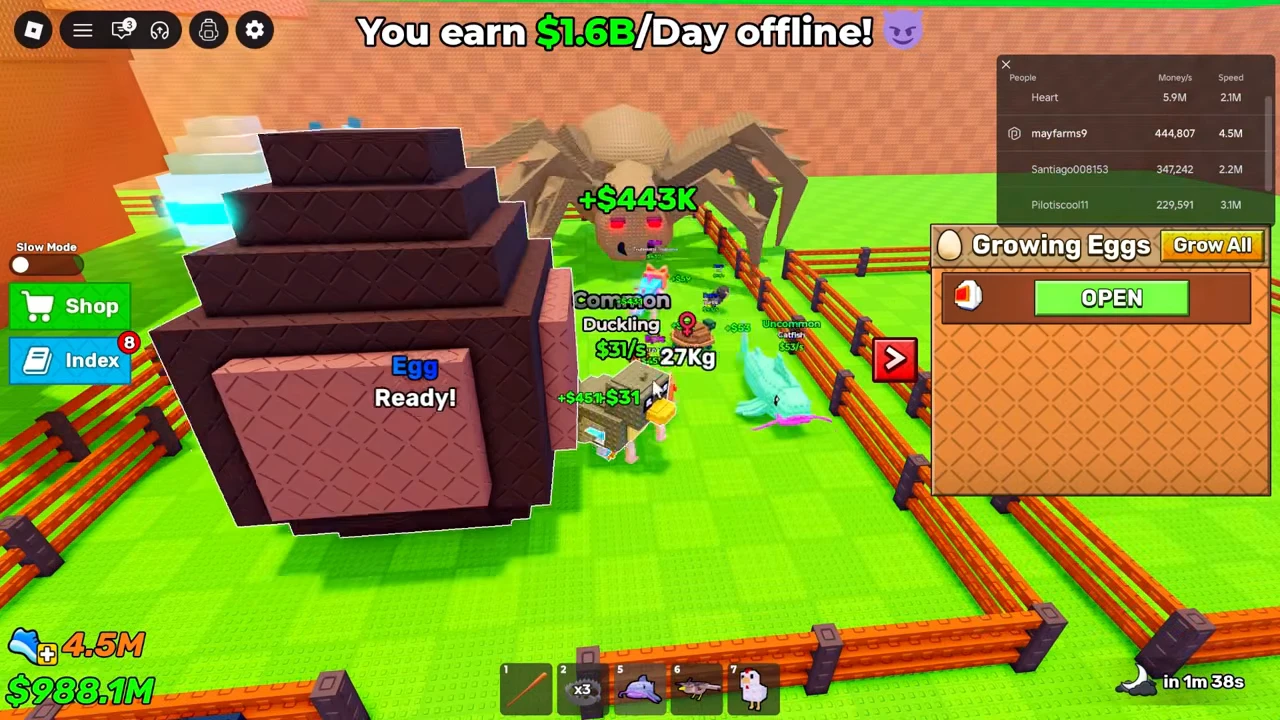
Duckling
$31/soverhead display
- Weight
- 27Kg
- Source egg
- Not linked
View this state and its evidence
- Active-list income
- Not recorded
- Size class
- Not observed
- Mutation field
- Not observed
- Source biome
- Not linked
Observation 233s · mayrushart · uploaded 2026-08-20. Exact client build unknown.
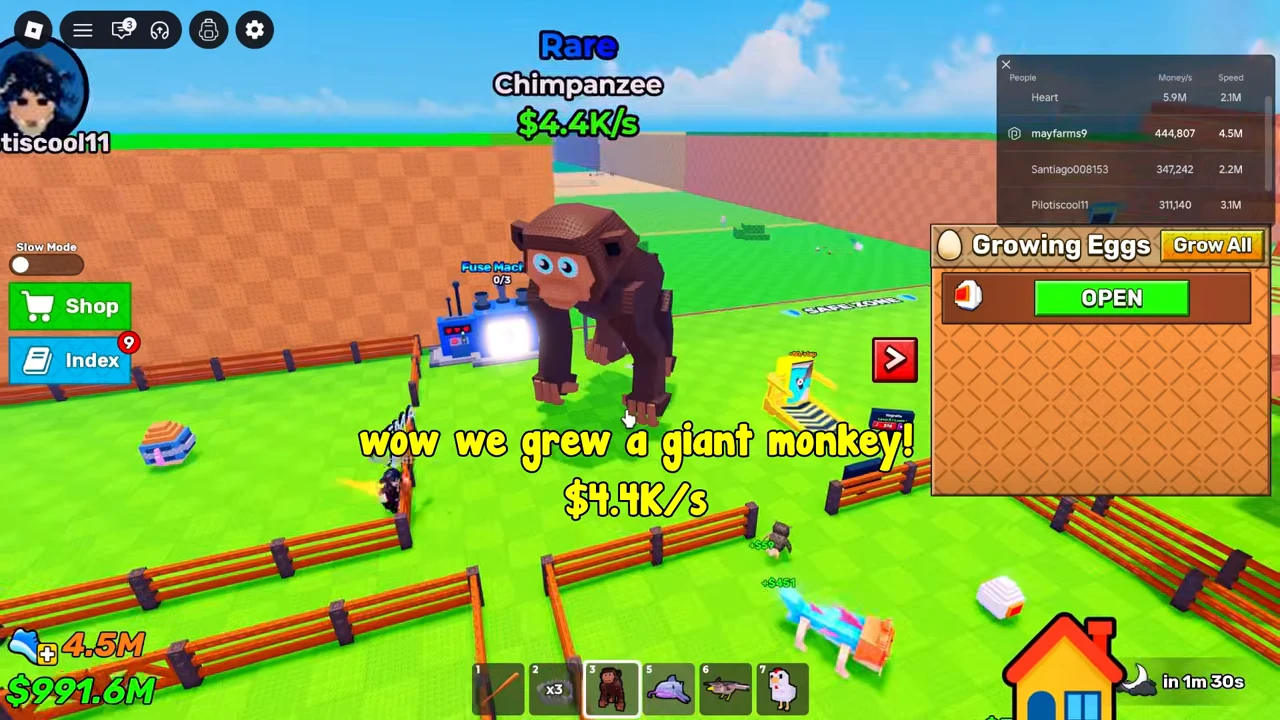
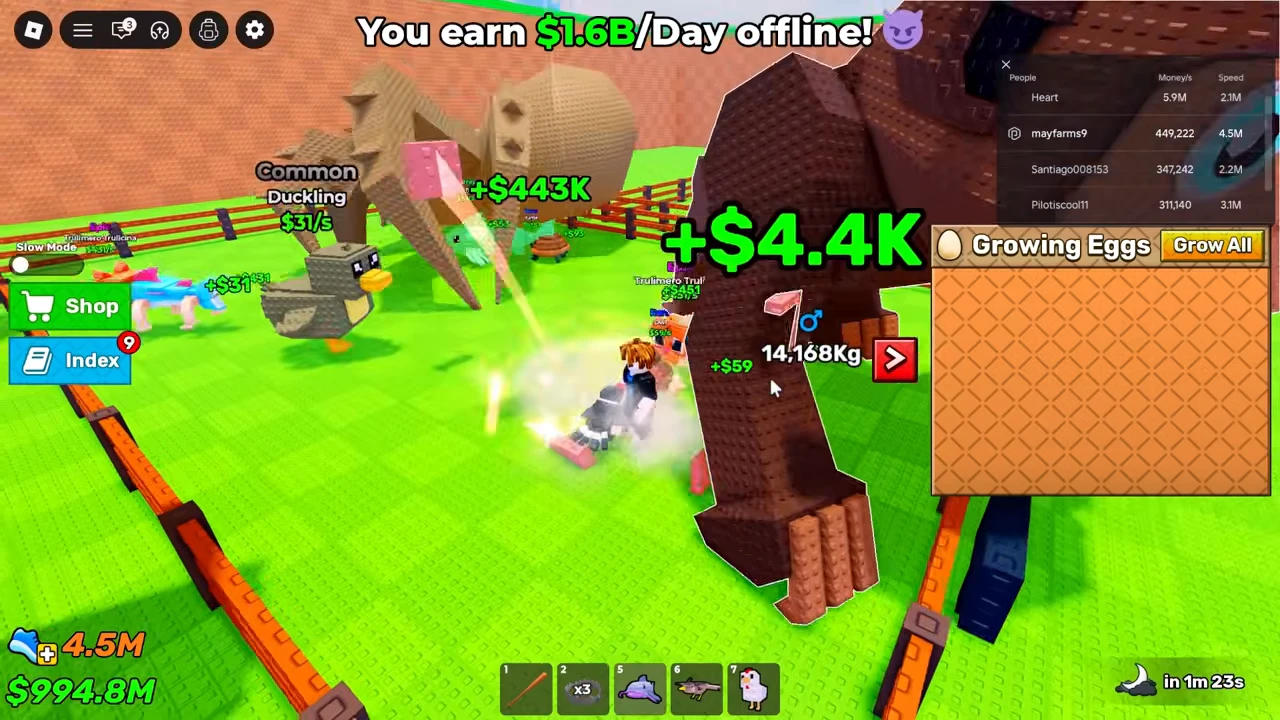
Chimpanzee
$4.4K/soverhead display
- Weight
- 14,168Kg
- Source egg
- Egg → this hatch
View this state and its evidence
- Active-list income
- Not recorded
- Size class
- Not observed
- Mutation field
- Not observed
- Source biome
- Not linked
Observation 239s · mayrushart · uploaded 2026-08-20. Exact client build unknown.
The visible label is Egg. This linked hatch does not identify a named egg species or guarantee its outcome. Watch the recorded sequence.
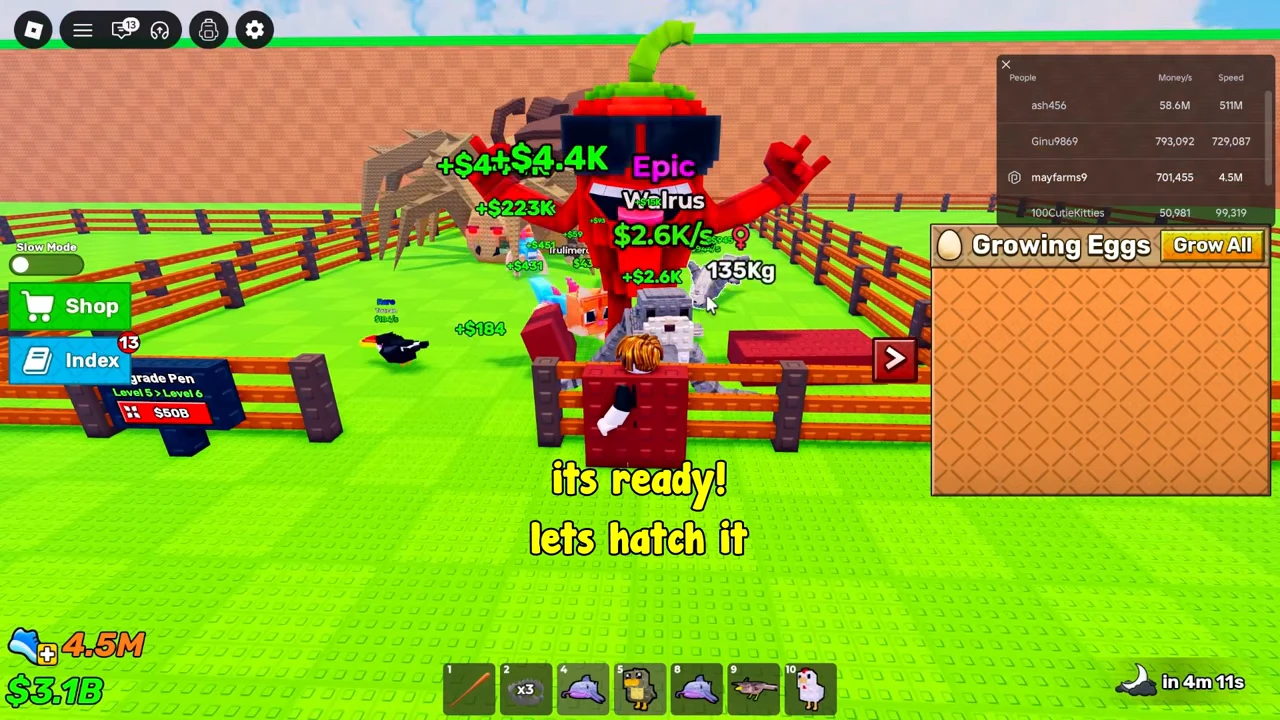
Walrus
$2.6K/soverhead display
- Weight
- 135Kg
- Source egg
- Not linked
View this state and its evidence
- Active-list income
- Not recorded
- Size class
- Not observed
- Mutation field
- Not observed
- Source biome
- Not linked
Observation 337s · mayrushart · uploaded 2026-08-20. Exact client build unknown.
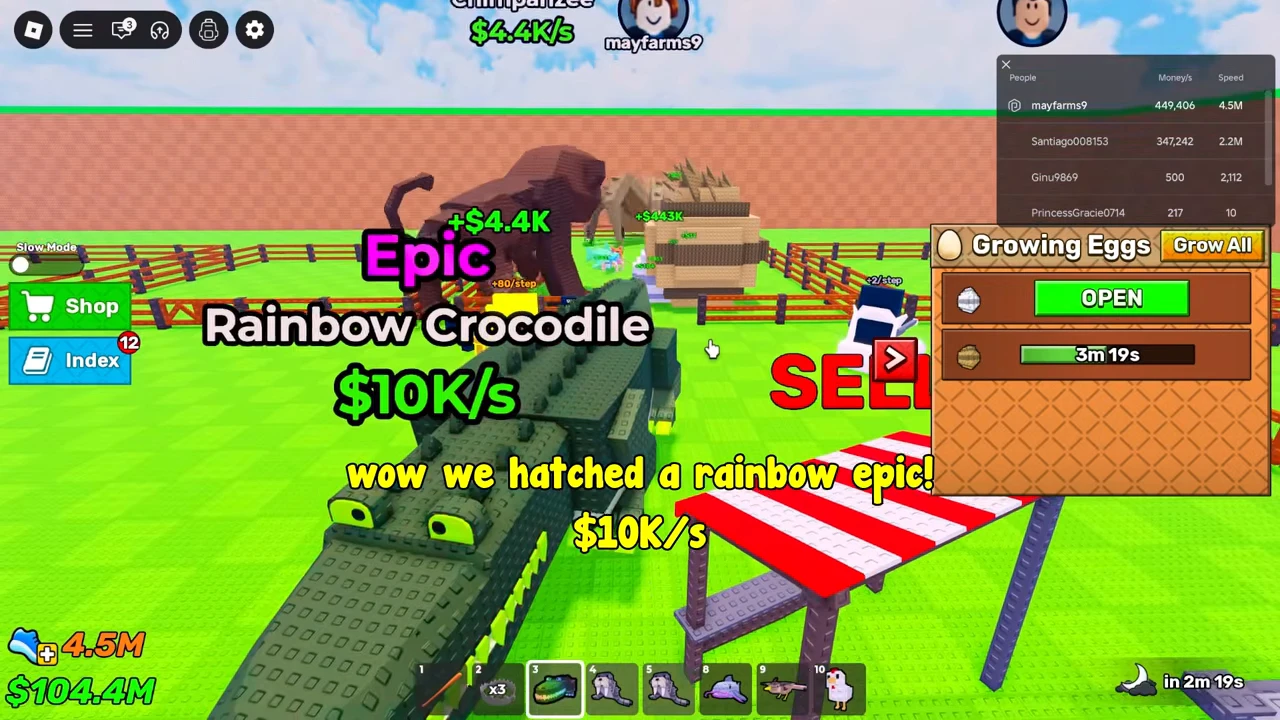
Rainbow Crocodile
$10K/soverhead display
- Weight
- Not observed
- Source egg
- Not linked
View this state and its evidence
- Active-list income
- Not recorded
- Size class
- Not observed
- Mutation field
- Not observed
- Source biome
- Not linked
Observation 283s · mayrushart · uploaded 2026-08-20. Exact client build unknown.
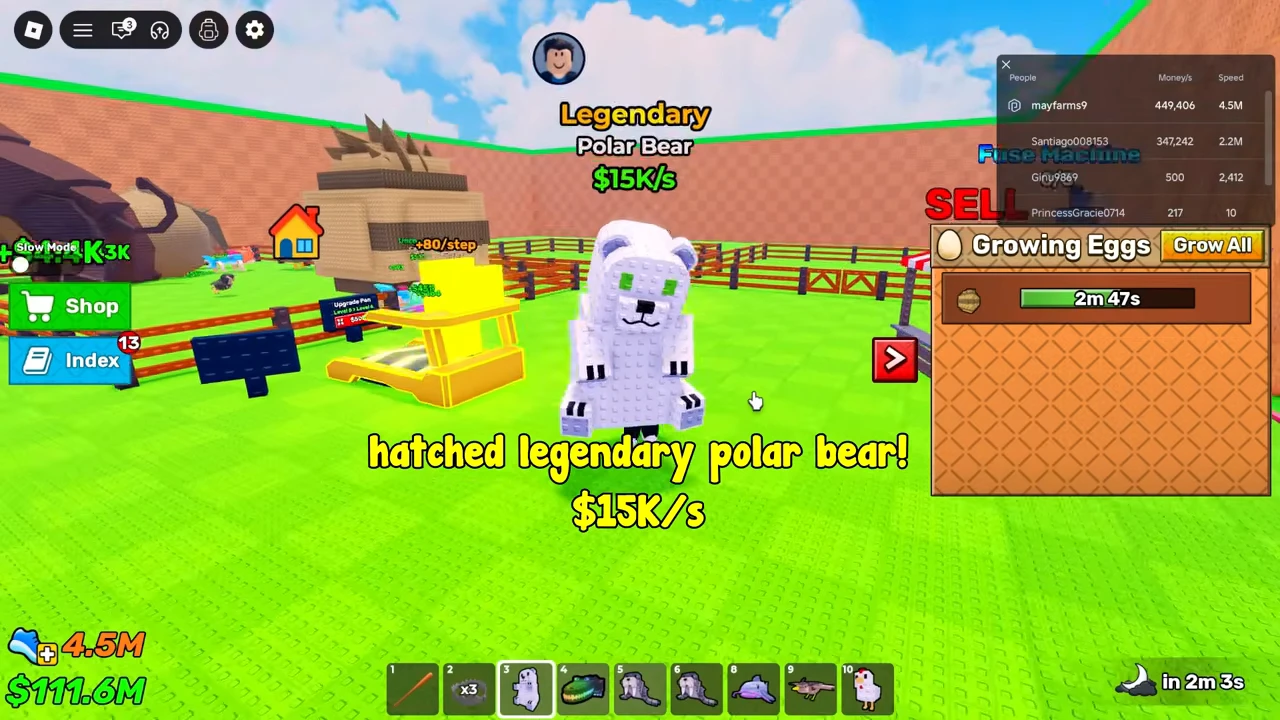
Polar Bear
$15K/soverhead display
- Weight
- Not observed
- Source egg
- Not linked
View this state and its evidence
- Active-list income
- Not recorded
- Size class
- Not observed
- Mutation field
- Not observed
- Source biome
- Not linked
Observation 290s · mayrushart · uploaded 2026-08-20. Exact client build unknown.
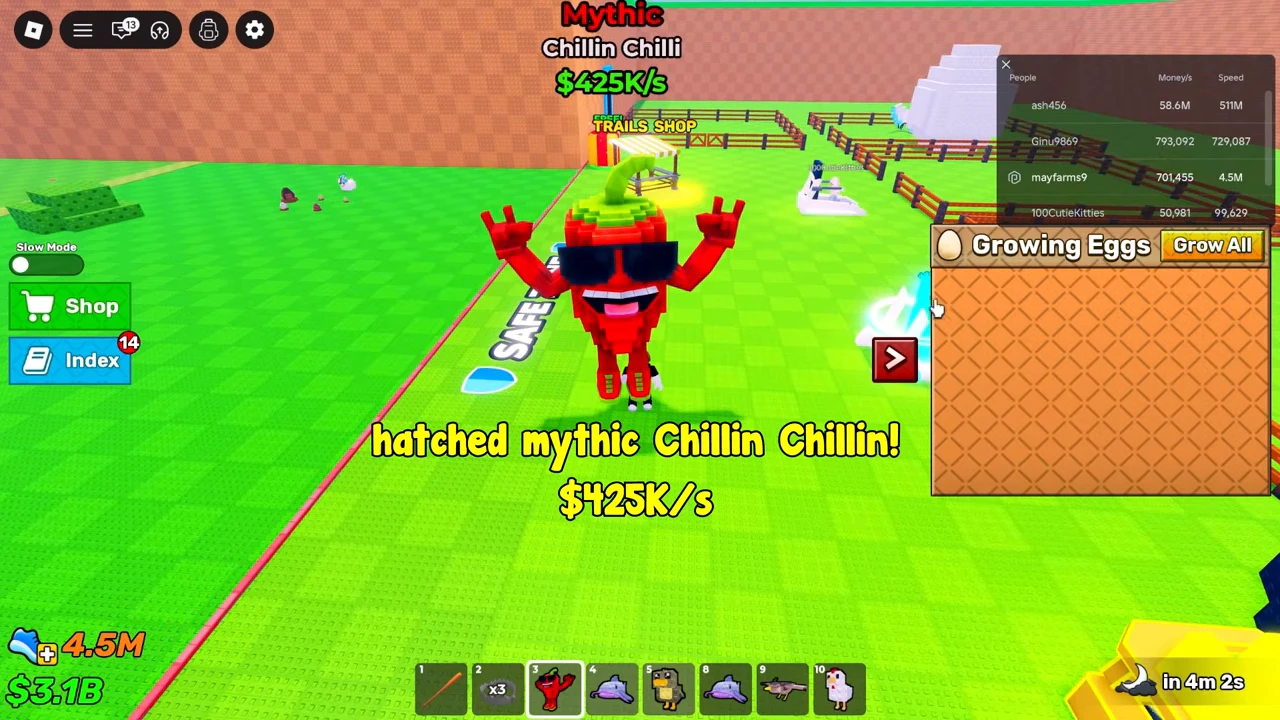
Chillin Chilli
$425K/soverhead display
- Weight
- Not observed
- Source egg
- Egg → this hatch
View this state and its evidence
- Active-list income
- Not recorded
- Size class
- Not observed
- Mutation field
- Not observed
- Source biome
- Not linked
Observation 340s · mayrushart · uploaded 2026-08-20. Exact client build unknown.
The visible label is Egg. This linked hatch does not identify a named egg species or guarantee its outcome. Watch the recorded sequence.
Sand Spider has two readouts in one frame
At 2:58.8, the large Sand Spider shows $221K/s overhead while its active-list entry shows $221.8K/s. The same frame exposes its 8,530Kg weight. The database preserves both readouts instead of treating the shorter overhead label as a different pet value.
Use the exact display you are comparing. This frame does not isolate a base rate, measure every active modifier or establish a formula that turns weight into income.
Weight does not supply an unseen size class
The Chimpanzee’s 3:59 name and $4.4K/s label are linked to the large outlined specimen at 4:00, where its hover label reads 14,168Kg. The smaller primate elsewhere in the pen is a different specimen.
Owl, Sand Spider, Duckling, Chimpanzee and Walrus are the five rows with observed weights. Their numeric labels do not by themselves establish a named Huge or other size class, so the separate size-class field remains unknown.
Keep source eggs and mutation fields separate
Golden Chicken and Rainbow Crocodile are the exact recorded display names. No independent mutation panel or application action is attached to those rows, so the database does not fill a separate mutation field from the name alone.
Five rows link a generic Egg label to the subsequent named pet: Golden Chicken, Trulimero Trulicina, Sand Spider, Chimpanzee and Chillin Chilli. The other rows do not have an accepted source-egg link here. No row invents a named egg or biome from a pet’s appearance.