Read one complete example
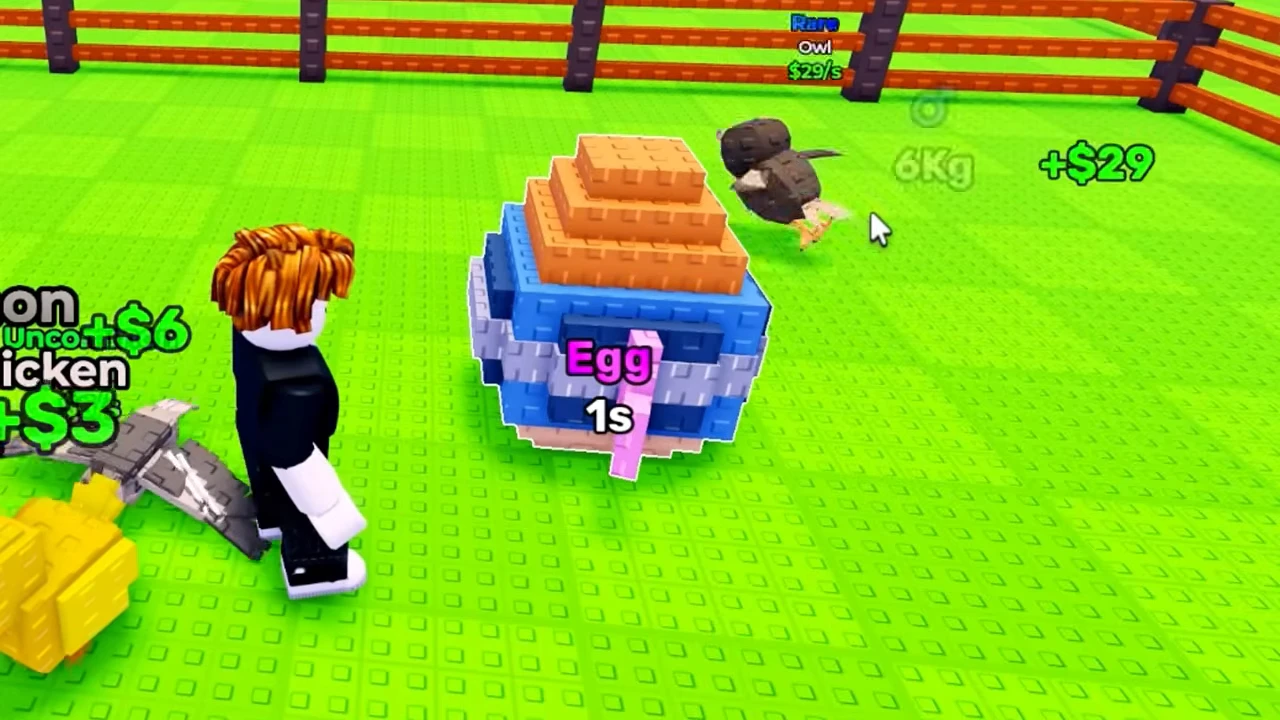
The Owl frame shows Rare, Owl and $29/s above that specimen, while its hover readout shows 6Kg. This is a recorded specimen’s display, not a species-wide base rate.
What qualifies a field for the database
| Field | Evidence required for this site |
|---|---|
| Name and rarity | Readable native labels tied to the specimen. |
| Weight or size | An explicit readout; a large-looking model is not a named size class. |
| Pet income | A native rate with its unit and the specimen identity. |
| Egg sale value | The egg’s own confirmation offer; pet income is a different quantity. |
| Mutation | An explicit mutation field or witnessed application; a name prefix alone is insufficient. |
| Hatch origin | A continuous linked egg-to-pet sequence; appearance alone does not identify a source biome. |
| Upgrade result | The purchase control and resulting state, not an isolated cost screenshot. |
Inspect a record’s proof
Open a pet entry in the linked database. Its evidence identifies the source and observation time. Read unknown fields as missing evidence, rather than zero weight, no mutation or a free purchase.
Compare like quantities
Use egg sale offers for egg cash value and displayed pet rates for income. A balance total, a one-time payout and a per-second rate answer different questions. The database retains the original units and does not calculate a weight multiplier from unrelated specimens.